
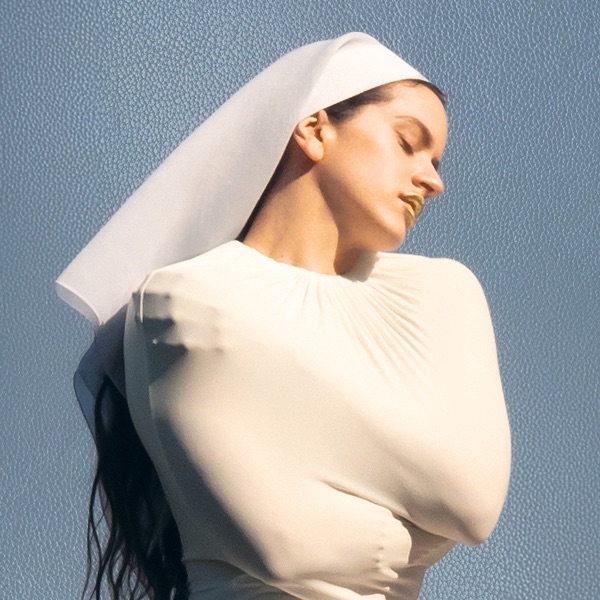
Since she burst onto the scene in the late 2010s, Rosalía has been one of the most interesting and polarizing artists in music. She is an artist who is beloved by so many for her avant-garde and experimental approach to Latin and Spanish music, having pushed boundaries with her sound and style ever since she became popular. Not everyone has always been on her side, though, as she has been scorned for her non-typical approach to music as well. Her first solo album, El Mal Querer, was an absolute revelation. Its sound is unlike anything that came before it, mixing traditional Flamenco music with Pop and Hip Hop. At times, it sounds extremely old and pristine; at others, it sounds strange and futuristic. Lyrically, this record is incredible as well, taking inspiration from a 13th-century feminist novel called Flamenca. Following her ascent to superstardom with this record, Rosalía completely changed her tone. Over the next couple of years, she released several Reggaeton and Latin Hip Hop tracks, completely going against the sound she became known for. She followed up these singles with the release of her second record, Motomami. This record sonically combines elements of her first record with the Latin Hip Hop tone of her subsequent singles. Ultimately, it is a wild, genre-bending album where Rosalía once again carves her own lane. Three years after the iconic Motomami, Rosalía has returned with what may be her most unorthodox and off-center record yet, LUX. It also may be her best release yet. This record veers away from the modern sound of the last record. Instead, it has a classical, operatic Art-Pop sound to it that is somewhat similar to her first record, but still so different. It is extremely powerful and heavy, and just so individual. Below, I wanted to highlight some of my favorite tracks from Rosalía’s LUX, then go over some more overall thoughts to close things out. Please let me know in the comments below what your favorite songs are from LUX, as well as how you feel about it as a whole!
SEXO, VIOLENCIA Y LLANTAS
Rosalía begins the record on a wildly captivating note, ‘Sexo, Violencia, y Llantas.’ This is as big and monumental as an opening track as I have heard on any record in a long time. To be honest, it almost feels like the opening to a musical or even a symphony. The piano riff that begins the tracks is dazzling, drawing me in immediately. As the song moves forward, so does the instrumental. This instrumental has a very daunting and heavy feel to it. The strings that drive this one are melancholy and yet also warm. The vocals on ‘Sexo, Violencia, y Llantas’ are as alluring as the instrumental. Rosalia’s range is excellent, and she sings with a fervor that matches the emotional tone of the instrumental immensely. There are also some backing vocals that add intensity to the track as well. On ‘Sexo, Violencia, y Llantas,’ Rosalía sets the stage for the topics she will cover throughout the record. The record details a chaotic relationship that includes lust, violence, betrayal, and more; this track alludes to what is to come.
RELIQUIA
Rosalia follows up the intense, larger-than-life introductory track in ‘Sexo, Violencia, y Llantas’ with a way fresher and lighter-sounding track in ‘Reliquia.’ The tone of this track is way more inviting and pleasant than the opener. The violins that drive this track have a very ethereal and lovely tone to them. These violins are complemented by some squeaky and abrupt-sounding synths at some points in the track, giving the song a heavier and fuller feeling at these points. The beat for ‘Reliquia’ is faint yet punchy. There is something about this track that adds an anxiety to the track, which starkly contrasts the feeling of the melody and vocals. This feeling especially comes through in the song’s outro. Speaking of vocals, ‘Reliquia’ has easily one of my favorite vocal performances of the album. Rosalia’s range on the song is eye-opening, and the emotion in her voice is so palpable. On ‘Reliquia,’ Rosalía sings about how her many experiences in life and everywhere she has gone have shaped who she has become. Even though she has been through a ton of negativity, she always believes in love and gives her heart to her significant other.
PORCELANA
The fourth song, ‘Porcelana,’ completely moves away from the tone of the first three tracks. This one feels a lot darker and meaner than those three, for sure. For one, the melody for this one feels a lot colder. The strings that drive this melody have a frigid feeling. The melody for ‘Porcelana’ is probably the least notable portion of the track, though. The main reason this song is so enthralling is the beat. The beat for ‘Porcelana’ is so weird and hard to pinpoint. There is an element of this beat that feels almost like an Alternative Hip Hop song, particularly in the use of the bass drum. The beat also contains elements of Flamenco music with the pacing of the clapping; this is like a Hip Hop/Flamenco fusion. The vocals on ‘Porcelana are super interesting. Rosalía sings and raps on this track, and the male guest vocals from Dougie provide texture and a feeling of longing as well. On ‘Porcelana,’ she acts as the seductress, calling herself a diva who can give you everything you want. She is trying to convince her lover that they will never need to look anywhere else, because she is all they could ever need.
LA PERLA (WITH YAHRITZA Y SU ESENCIA)
La Perla’ is one of the tracks from this project that is popping off the most right now, and it is easy to see why. ‘La Perla’ is easily one of the sweetest and most positive-sounding songs on the record. The melody for this track is so bright and sunny when compared to the rest of the songs. The strings that drive this melody have a very delightful, sugary tone to them. They almost have a Disney quality. For some reason, when I hear this one, I immediately think of the scene in Snow White when she is singing to the animals who are coming into her house. There is something so joyous about the melody for this track, and it definitely has a feel-good musical element. This gratifying feeling of the instrumental is amplified by the vocals. Rosalía’s and her features’ vocals add to the magic and stunning feeling that this song has. On ‘La Perla,’ Rosalía sings about a man who is very charming and gets everyone to love them, but breaks hearts and takes advantage of them. She accuses this person of being someone who can not be trusted.
DIOS EN UN STALKER
As awesome as this album is, there are not a ton of songs I would download into more traditional playlists. In other words, LUX is mostly better to listen to as a whole as opposed to listening to specific tracks. That being said, there is one song I knew I had to download immediately, and that is ‘Dios En Un Stalker.’ This one is probably the most palatable to more casual listeners(besides maybe ‘La Perla’). That is because it is the most Poppy song. ‘Dios Es Un Stalker’ is one of the only songs with a true drum beat, with the pacing of almost having a Reggaeton feeling to it. The melody for this one is actually driven by a funky bass guitar riff. Various string instruments come in as the song goes along, giving the melody more power as it progresses. ‘Dios Es Un Stalker’ does not contain the most astounding vocals from Rosalía, but her sweet, laid-back tone on this one makes it captivating. On ‘Dios En Un Stalker,’ Rosalía refers to herself as a goddess who is stalking the love of her life to make them fall for her. She watches this person’s every move to make sure she is the one this person ends up with.
SAUVIGNON BLANC
As striking and massive as this album is, one of the most compelling tracks is actually the softest one, ‘Sauvignon Blanc.’ This song goes against the grain of the rest of the album. It is not overpowering and does not really push the limits of Pop music in the way everything else does. Instead, it is very dainty and gentle. It is the only song that feels acoustic. The instrumental for ‘Sauvignon Blanc’ is mainly driven by a calm and angelic piano riff. There are some string instruments that do come in at some points(mainly in the hook) that give a fullness to the track, but for the most part, it is very laid back. Because the instrumental is so low-key, the emphasis is put on Rosalía’s excellent vocals. Like so many other moments on this record, the emotion in her vocals is palpable and striking, making ‘Sauvignon Blanc’ an emotional listen. On ‘Sauvignon Blanc,’ Rosalía sings of the love she has for her partner, stating she is willing to get rid of all of the vices in her life and in her past to be with this person.
LA RUMBA DEL PARDÓN (WITH ESTRELLA MORENTE & SILVIA PEREZ)
While listening to this record, I was wondering how often Rosalía would incorporate the Flamenco-inspired music that she originally became so known for back in the day. We get some elements of this on a few songs throughout the record(like ‘Porcelana’ and ‘La Perla,’ for instance), but we get a more true Flamenco-esque song in the 13th track, ‘La Rumba Del Pardón.’ This song is driven by the claps that make up the beat. These claps are complemented by a big bass drum that comes at times, giving a booming effect to the track. The melody for ‘La Rumba Del Pardon’ has a very fiery tone to it. The guitar riff that drives this one has a bit of a twang, and the other string instruments add strength and passion to the feeling of the track. The vocals from Rosalia carry the passion of the instrumental, and both features have great chemistry with her and complement her as well. On ‘La Rumba Del Pardón,’ Rosalía details the tumultuous circumstances between her and her lover. She sings about his faults and failures and betrayals, almost roasting him throughout the song. As the chorus says, though, she forgives this person for all of it.
If there is one thing that is unquestionable about Rosalía and her music, it is that she is never going to fall in line and that she is always going to push the limits. This point was reiterated with the release of this album’s lead single, ‘Berghain,’ which I did not even cover. I can not remember the last time a Pop single came out that had that amount of intrigue and breathtaking feeling to it. In fact, I have just never heard a single by a Popular artist that sounds like it came right out of some 19th-century tragic musical. After a lead single like that, it may be tough to deliver on the expectations. This was not the case for LUX, however, as this record more than lives up to the hype. Every element of LUX is so interesting and unique. It feels like a record that could have separate essays written about its lyricism, instrumentation, vocals, and overall musicality. I am sure there will be many debates as to the technical categorization of the genres and overall sound of LUX. Is it a true classical Pop album? There are elements of Hip Hop, and there are synths and sound effects used on the record, which does go against this notion. There is really nothing traditional about the sound of LUX. The album does contain some more palatable and noticeable sounds and beats, but it is still just so outside the box. Rosalía has always been known as an excellent vocalist, but she may have outdone herself on this record; the vocals throughout every track are breathtaking and help the listener become immersed in the world she has created with the record. As great as the musicality is, the lyricism is possibly even better. Every song is so deep, and the story that Rosalía tells is extremely engrossing and moving. Overall, LUX is a weird, extraordinary, and ultimately exceptional album. Rosalía proved that she is still improving as an artist and is still as cutting-edge as any of her peers.
 EAST SIDE VIBES